
Introduction
Web development continues to transform how businesses connect with customers, manage operations, and deliver digital services. A modern website is no longer just an online presence; it is an essential business tool that supports customer engagement, brand visibility, sales, and long-term growth. As technology advances, companies need websites and web applications that are faster, more secure, mobile-friendly, and adaptable to changing market demands.
At Scideas Solutions Pvt. Ltd., we understand the importance of building digital experiences that align with business objectives. By combining modern development technologies, responsive design, and customised functionality, businesses can create a strong digital foundation for the future.
How Web Development Has Evolved
Web development has progressed from simple static web pages to dynamic, interactive, and data-driven applications. Earlier websites primarily displayed information, while modern platforms support online transactions, customer portals, content management, business automation, and real-time communication.
The growing use of smartphones has also made responsive design essential. Customers expect websites to work smoothly across desktops, tablets, and mobile devices. At the same time, businesses require scalable platforms that can accommodate increasing traffic, new features, and changing customer expectations.
This evolution has made web development a strategic investment for organizations of every size.
Emerging Web Development Trends Shaping the Future
1. AI-Powered Features and Intelligent Automation
Artificial intelligence is creating new opportunities for more interactive and personalized web experiences. Businesses can integrate intelligent chatbots, automated customer support, recommendation systems, and advanced search functionality into their websites.
These features can help visitors find relevant information quickly while reducing repetitive manual tasks for support teams. Developers can also use modern development tools to streamline selected coding, testing, and debugging activities.
However, successful implementation requires thoughtful planning, data protection, and human oversight. Businesses should adopt AI-powered functionality when it solves a genuine customer or operational problem.
2. Progressive Web Applications for Better Accessibility
Progressive Web Applications (PWAs) combine many benefits of websites and mobile applications. Depending on browser and device support, they can offer installable experiences, offline access to selected content, and faster repeat visits.
For businesses, PWAs can provide an alternative to developing and maintaining separate applications for every platform. They can be particularly useful for e-commerce, education, travel, and service-based organizations that want to improve mobile accessibility.
A well-planned PWA should prioritize usability, loading speed, accessibility, and compatibility with the devices customers actually use.
3. Responsive Design and User Experience
User experience will remain a major factor in successful web development. Visitors expect intuitive navigation, readable content, accessible interfaces, and straightforward ways to complete tasks.
Responsive design ensures that layouts adapt to different screen sizes without compromising functionality. Developers must also consider accessibility, consistent branding, clear calls to action, and simplified forms.
A positive user experience can help businesses build trust, encourage repeat visits, and support conversions. At Scideas Solutions, the focus is on developing websites that balance visual appeal with practical functionality and business requirements.
4. Modern Frameworks and Scalable Architecture
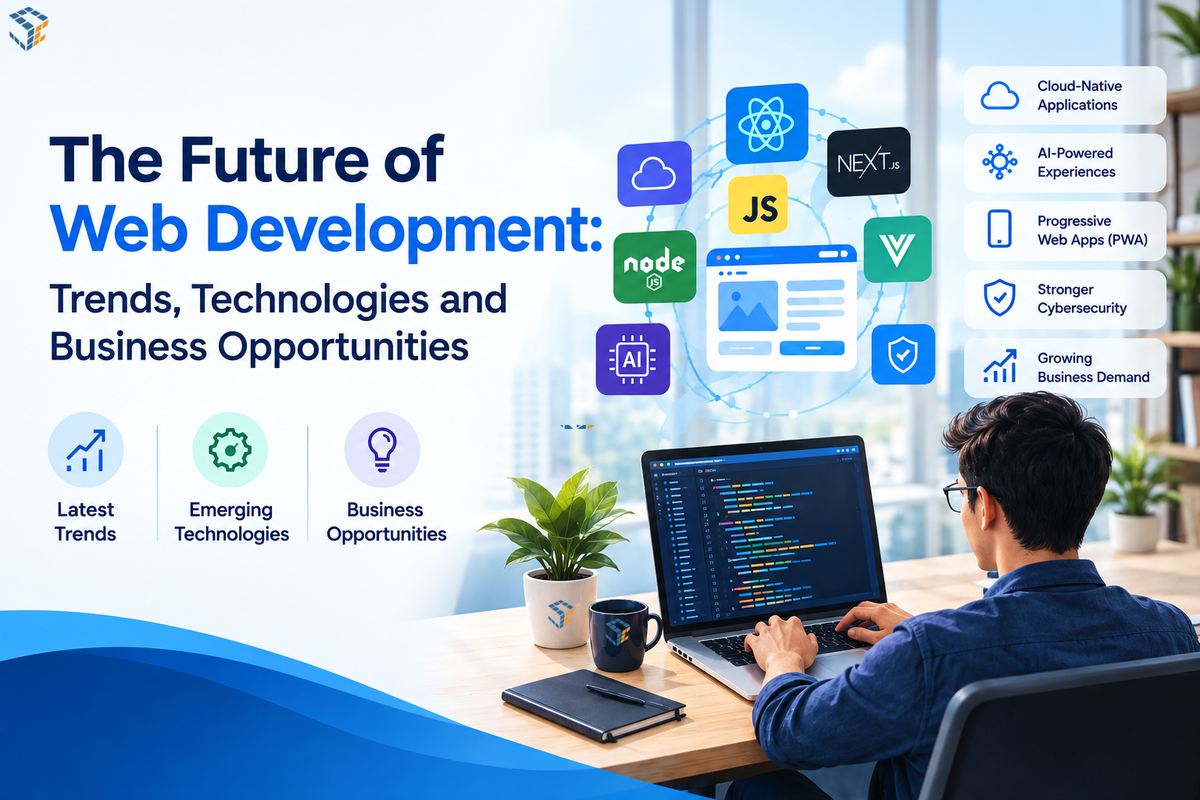
Technologies such as React, Next.js, Node.js, and Laravel give developers flexible options for building modern web applications. Content management platforms such as WordPress and Drupal also help businesses manage digital content efficiently, while Magento supports specific e-commerce requirements.
The right technology depends on project complexity, integration needs, maintenance requirements, budget, and expected growth.
Scalable architecture allows businesses to introduce new features, connect third-party services, and manage increasing demand without unnecessarily rebuilding their entire platform. Choosing an appropriate framework at the beginning can improve maintainability and support future development.
5. Website Performance and Core Web Vitals
Website speed directly affects how visitors interact with digital platforms. Slow-loading pages can frustrate users, interrupt purchasing journeys, and reduce engagement.
Performance optimization involves image compression, efficient code, caching, suitable hosting, and minimizing unnecessary scripts. Developers should also monitor Google’s Core Web Vitals, which assess important aspects of loading performance, responsiveness, and visual stability.
Regular performance testing helps identify technical problems before they significantly affect the customer experience. A faster website can make information easier to access and support broader digital marketing goals.
6. Cybersecurity and Data Protection
As websites handle more customer information and business transactions, security must be included throughout the development process. Common priorities include secure authentication, access controls, data encryption, input validation, software updates, and reliable backup procedures.
Third-party integrations and outdated components can also introduce risks if they are not maintained properly.
Businesses should treat security as an ongoing responsibility rather than a one-time development task. Regular updates, vulnerability assessments, monitoring, and appropriate data-handling practices help protect users and strengthen confidence in digital services.
7. API Integrations and Connected Business Systems
Modern businesses often depend on multiple applications for customer relationship management, payments, marketing, inventory, reporting, and communication. API integrations help these systems exchange information and reduce disconnected workflows.
For example, an e-commerce website may connect with a payment gateway, inventory platform, and CRM to support a more consistent customer journey. Similarly, a service business can integrate enquiry forms with its CRM to improve lead management.
Well-designed integrations can reduce manual data entry, improve operational visibility, and help teams work more efficiently.
Why Businesses Need a Future-Ready Web Development Strategy
Adopting new technologies without a clear purpose can increase complexity and costs. Businesses should begin by identifying their objectives, understanding customer needs, and evaluating existing technical limitations.
A future-ready strategy should include:
- Business-focused planning: Define measurable goals before selecting technologies.
- Mobile-first experiences: Make important features accessible across devices.
- Scalable development: Prepare the platform for new requirements and business growth.
- Security and maintenance: Schedule updates, testing, monitoring, and backups.
- Continuous improvement: Use performance data and customer feedback to refine the experience.
These practices help organizations make informed technology decisions and build digital platforms that remain useful over time.
How Scideas Solutions Supports Modern Web Development
Scideas Solutions Pvt. Ltd. provides web development services designed around business needs and project requirements. Our technology expertise includes PHP and Laravel, React.js, Next.js, Node.js, WordPress, Drupal, and Magento.
From business websites and content management systems to custom web applications and third-party integrations, the right development approach begins with understanding the client’s goals.
Our focus is on creating practical digital solutions with attention to usability, performance, maintainability, and scalability. Whether a business is building a new platform or improving an existing website, a structured development process can help turn its requirements into a dependable digital solution.
Conclusion
The future of web development will be shaped by intelligent automation, responsive experiences, modern frameworks, stronger security, improved performance, and connected business systems. Companies that invest in the right technologies and continuously improve their digital platforms will be better prepared to meet changing customer expectations.
At Scideas Solutions, we believe effective web development starts with understanding business challenges and building solutions that deliver practical value. With thoughtful planning and the right technical approach, businesses can develop digital experiences that support customer relationships, operational efficiency, and sustainable growth.